Protein and Metabolic Rate: How Much Should You Eat?
The Direct Answer: For men focused on metabolic health and weight loss, the "standard" RDA (0.8g/kg) is woefully insufficient. To optimize your metabolic rate and protect lean tissue, you should aim for 1.6g to 2.2g of protein per kilogram of body weight (roughly 0.7g to 1g per pound). If you are currently in a significant caloric deficit, staying at the higher end of that range is necessary to prevent your body from "burning" its own muscle for energy.
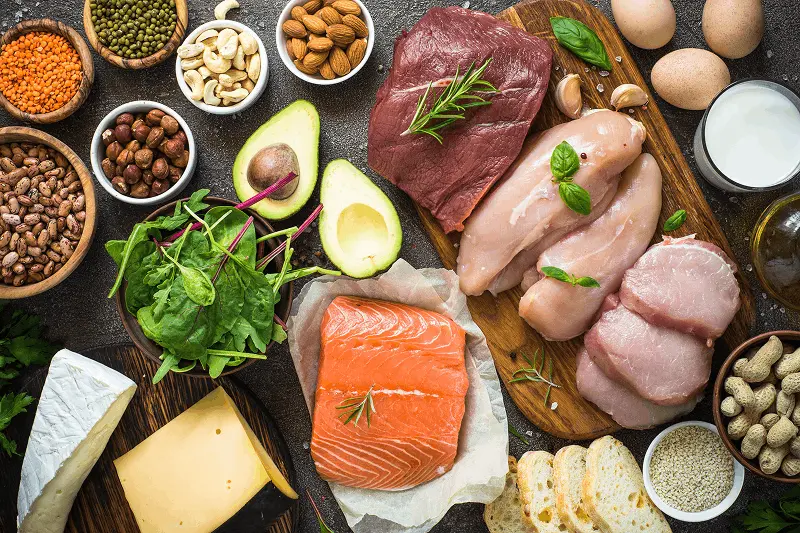
The Science: Why Protein "Boosts" the Burn
Protein influences your metabolic rate through two distinct biological pathways:
- The Thermic Effect of Food (TEF): Protein is chemically difficult to dismantle. Your body must spend roughly 25% to 30% of the calories contained in a protein-rich meal just to process it. In contrast, fats and processed carbs only require 3% to 10%. By eating more protein, you are effectively "taxing" your caloric intake.
- The Muscle Preservation Signal: Muscle is your most metabolically expensive tissue. By providing a constant stream of leucine (an essential amino acid), you signal the mTOR pathway to prioritize muscle protein synthesis. This prevents the "metabolic crash" that occurs when the body sheds muscle during weight loss.
Key Components: Calculating Your Goal
To find your specific target, use your Goal Body Weight rather than your current weight if you have a significant amount of fat to lose. This ensures you aren't over-calculating based on adipose tissue.
| Goal | Protein Target (per lb) | Protein Target (per kg) |
|---|---|---|
| General Health | 0.6g – 0.7g | 1.3g – 1.5g |
| Fat Loss (GLP-1 Support) | 0.8g – 1.0g | 1.8g – 2.2g |
| Muscle Building (Bulking) | 0.7g – 0.9g | 1.6g – 2.0g |
Pro Tip: If you weigh 200 lbs (91 kg) and are on a GLP-1, aim for 160g to 200g of protein daily.
Dietary Foundations: The "Protein Pacing" Strategy
Your body cannot "store" protein for later use in the same way it stores fat or glycogen. Therefore, timing matters.
- The 30g Minimum: To trigger "muscle protein synthesis," you need a "leucine threshold" of about 2.5g to 3g, which is typically found in 30g to 40g of high-quality protein.
- Even Distribution: Instead of eating a small breakfast and a massive steak at dinner, split your protein into 3–5 servings throughout the day. This keeps your metabolic "repair shop" open 24/7.
- The "First Bite" Rule: On a GLP-1, you will get full quickly. Always eat your protein source first before moving to vegetables or starches. This ensures you hit your metabolic requirements before the "fullness" signal hits your brain.
Red Flags: Signs of Protein Deficiency
If you aren't eating enough protein while losing weight, your body will send these distress signals:
- "Skinny Fat" Appearance: You are losing weight on the scale, but your body looks softer and your clothes don't fit significantly better.
- Brittle Nails & Hair Thinning: Your body is diverting amino acids away from "cosmetic" tissues to preserve vital organs.
- Persistent Hunger: Protein is the most satiating macronutrient. If you are constantly "snacky" despite being on a GLP-1, you likely need more protein.
FAQ Section
Can too much protein damage my kidneys?
For individuals with healthy kidneys, research consistently shows that high-protein diets (up to 3g/kg) are safe. However, if you have pre-existing Chronic Kidney Disease (CKD), you must consult your nephrologist to determine your specific protein ceiling.
What if I can't eat that much meat?
Liquid protein is a "cheat code" for GLP-1 users. High-quality whey isolate or collagen peptides can help you hit your 160g+ goal without feeling overly stuffed or bloated.
Keep reading

Lifestyle · September 22, 2026 · 2 min read
Body Recomp After 40: Losing Fat Without Losing Muscle
Lifestyle · May 25, 2026 · 2 min read
Metabolic Boosting Foods: Separating Fact from Fiction

Lifestyle · May 25, 2026 · 2 min read
The Best Vitamins for Metabolic Support: A Science-Backed List
Not sure where to start?
We’ll find your treatment.
Our quiz matches you to the right protocol or individual treatment in under 2 minutes.
- No commitment
- Takes only 2 minutes
Not sure where to start? We’ll find your treatment.
Our quiz matches you to the right protocol or individual treatment in under 2 minutes.
- No commitment
- Takes only 2 minutes